Wednesday, September 18, 2013

Robotic Origami Stroller Charges Your Mobile As You Push

robotic stroller

Bethenny Frankel, husband Jason Hoppy and their daughter Bryn go for a stroll together in Soho, one day after their two year wedding anniversary

Science is progressing fast, look at what we have achieved in the last decade! It never does cease to amaze us; new inventions, innovations, improving previous designs and making our lives easier everyday. We are living in the era of technology. What was once considered pure science fiction is actually, physically, present today and is functional. We have come a long way from the times when TV was found in handful of people’ house.
Remember ‘The Jetsons’? Those super awesome cartoons that used to air back in the days when cartoons were genuinely good and not just random stuff which didn’t make much sense. Yes, we are almost at the same technologically advanced environment or at least there are some certain inventions which make us feel that way, for example; this all new Origami Strollers which are robotic strollers. These strollers come up with quite a number of features; USB charger, street lights and a pedometer. They are amazingly astounding but as with any new gadget, they do need major improvisations and design improvements.

Origami Stroller 4
Origami Stroller 3They are still not portable and are quite bulky and hence heavy. However, keeping in mind that they are robotic, this isn’t something that was not expected. But we definitely hope that the makers would compensate this in the subsequent designs to make it more user-friendly. We also would want to point out another issue; when you’re trying to close it, the motors might jam during the collapsing. This may result in a panic attack for you and you will be left with half opened robot which cannot accommodate a child and you’d be carrying them both; child and your awesome stroller.Origami Stroller 2Google won’t be of much help when it comes to manually closing the stroller. Yes, everything does go wrong simultaneously! But let’s face it, this is a new invention that is probably in its test phase and all these glitches will hopefully be taken care of in the next design. However, one cannot deny that this is one cool gadget to own and has the luxury of a car in terms of the features that it has to offer.


Wi-Vi Uses WiFi Signals To Track Humans

researchers-can-see-through-walls-with-wi-vi

Did you all watch ‘Man of steel’? Are you a die hard fan of superman, too? We bet you are! We all have, at one point, wanted the superpowers that he has.
Well, now we can.
Thanks to science and this technological era that is making everything possible! What we have is a technology that could soon be embedded into your smart phone and voila, you can see behind walls. Say hello to ‘Wi-Vi’ a proud invention of MIT professor Dina Katabi and student (graduate) Fadel Adib. This is a demonstration of the technology that makes use of Wi-Fi to let the users ‘see’ a person moving behind a wall.
Wi-Vi 4

wi-vi-outputThe name is a combination of Wi-Fi and vision; get that? Wi and Vi combined! It has been proven that delicate reflections of wireless inter signals that bounce off a human can be used to track the person’s movements. However, these methods were tiresome and required either a Wi-Fi router in the same room as the person or as Professor Katabi puts it; ‘a whole truck just to carry the radio’.
Wi-Vi 3This new gadget makes use of the antenna that is found in a cell phone or laptop and hence it could be, one day, added to a phone. The key idea is to cancel out certain reflections and retain those that are bouncing off the human. These signals do bounce off other stuff too; walls, floors and furniture and are 10,000-100,000 times stronger as to those which bounce off a human. Katabi’s Wi-Vi sends out two signals, each inverse of one another and using ‘interference nulling’ concept, they cancel each other out unless they hit a moving target! Pretty useful, seeing as how the other stuff is stationary as compared to walls, floors and furniture.Wi-ViProfessor said; ‘To silence the noise, we change the structure of the Wi-Fi signal so all the undesired reflections cancel‘. The gadget will be portable and can be used for the safety purpose and could work as a baby monitor too. But the ultimate use might just be cops using it to catch the crooks.

The All Electric Mission R Takes You 0 To 60 Mph in 3 Seconds

Mission-Motorcycles-Mission-R-02

Mission R 4

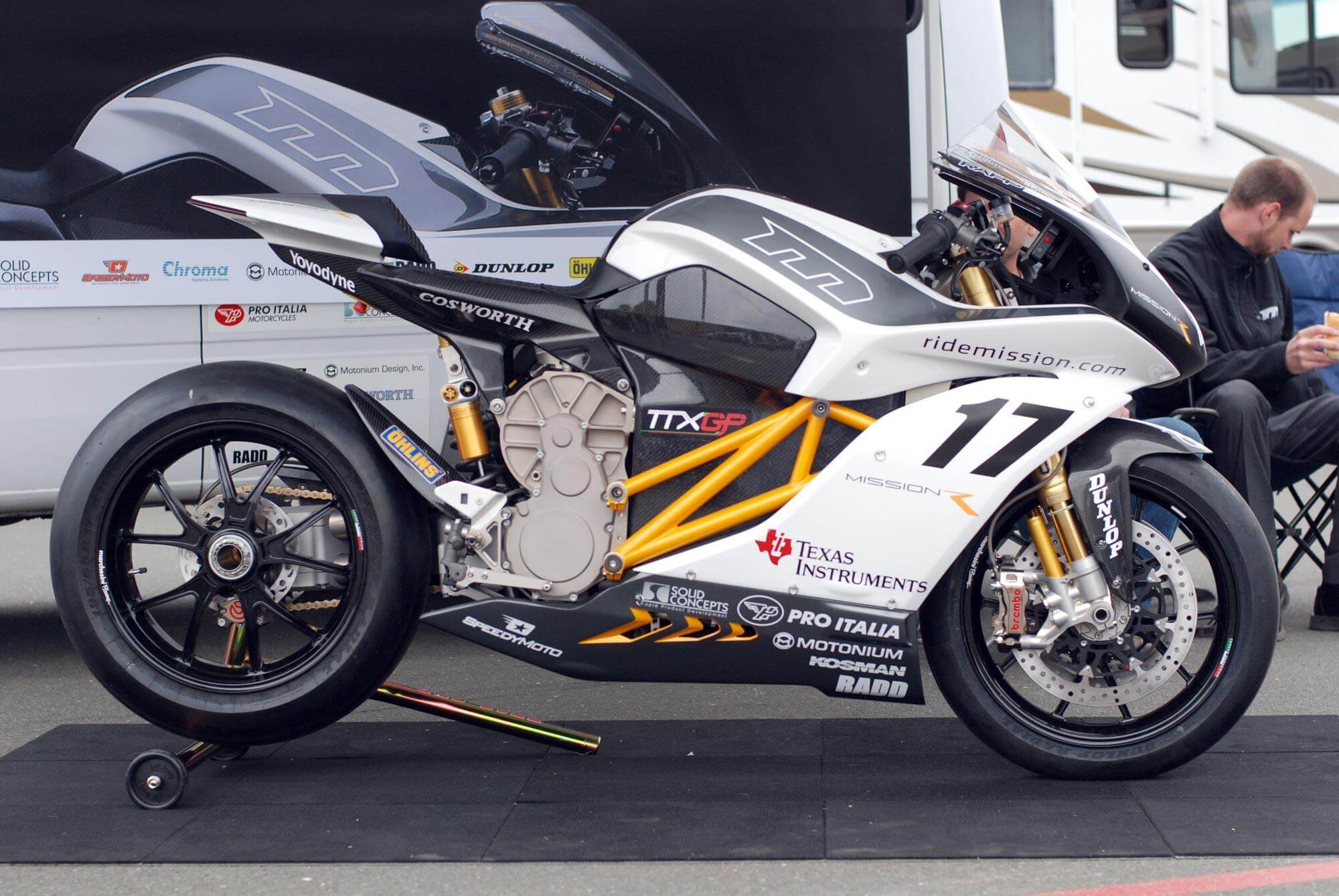
We are a fan of cars and bikes, who isn’t? A good car or bike is every other person’s dream. Well here comes the latest edition to the dream-set of fantasy rides brought to reality. This one is- wait for it- all-electric bike and has been introduced by San Francisco’s Mission Motorcycles. The bike is being called ‘Mission R’ and is one really amazing wonder of science and engineering. The bike is designed in the image of the winner of TTGXP Laguna Seca race 2011; all-electric Mission RS bike. Mission R is being developed to challenge any other bike on the road and so far they have done a wonderful job. We have a 120 kW, equivalent to 160 Hp, electric motor installed into Mission’s InfiniteDriveTM powertrain. The combination of these two has peaked Mission R’s performance and provided it with enough juice to do 0-60 Mph in only three seconds and can very conveniently reach a top speed of 150 Mph.
Mission R 3The Mission R comes equipped with 17kWh lithium-ion battery which is capable of a 140 miles range. The bike’s real uniqueness lies not in what it has to offer but what it doesn’t have to offer. As per Mission; ‘Devoid of pistons, crankshaft, clutch, and other mechanical parts rotating at thousands of rounds per minute, the Mission R creates a new dynamic in handling and control… Without the inertial forces created by hundreds of heavy spinning engine parts, the Mission R drops into corners like no other motorcycle.’

Mission R 2Mission R also surprises with the state of the art instrument set which is accessible from the Mission R’s touch screen UI. Mission R is a class in its own, being capable of taking care of Bluetooth devices, navigation and other various types of communication. Mission Motorcycles has set the asking price at $29,999.
Mission RThe only catch is that one needs to wait till after the mid of year 2014 before they can lay hands on this beast!

Now You Can Generate Electricity While You Walk On This Floor

power walking

Power Walking energy floor

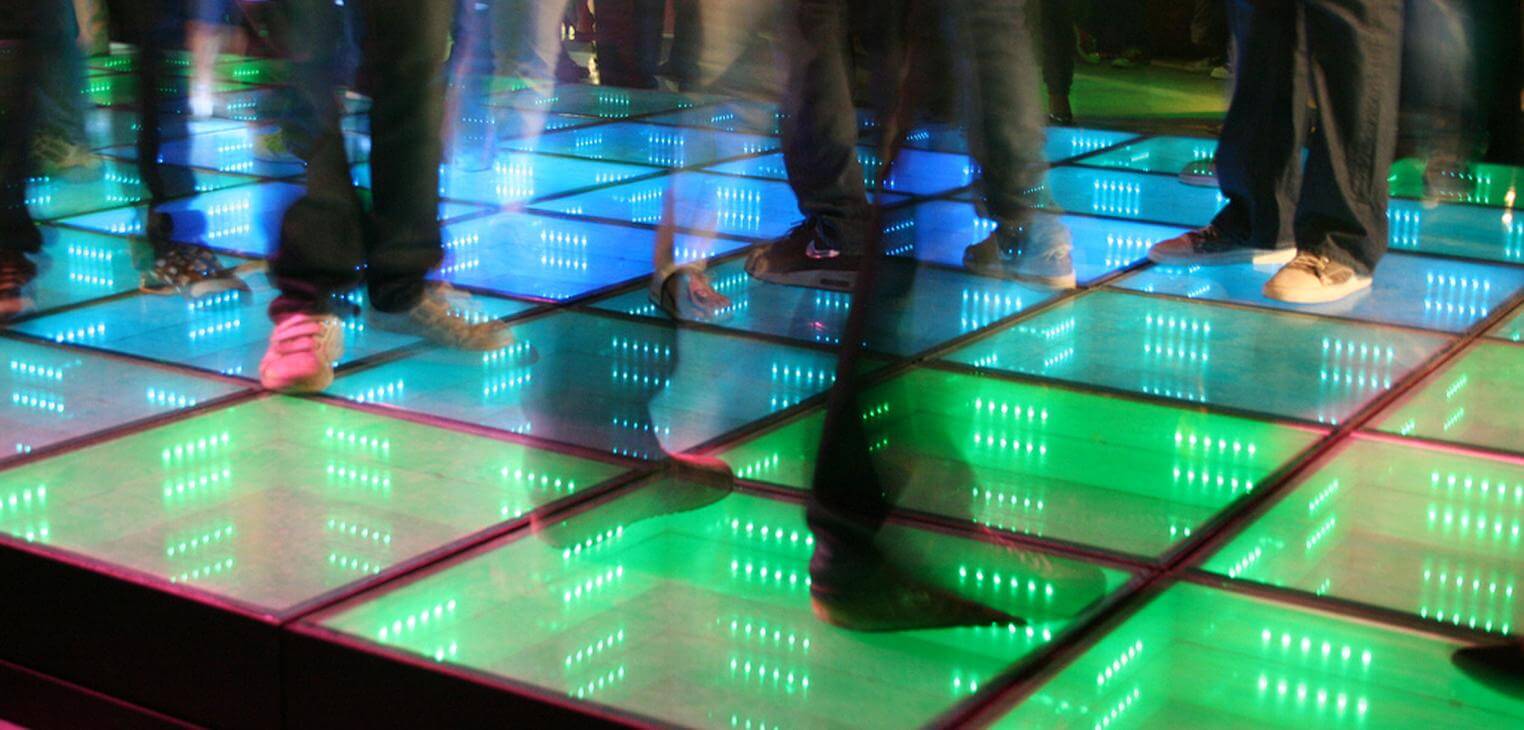
In the sustainable energy market, Energy Floors, a Netherlands-based firm is trying hard to make its place. They sell products like Sustainable Energy Floor and Sustainable Dance Floor, that convert footsteps into electricity. As soon as anyone steps onto the floor, the tile flexes round about 10mm, and that movement is converted into electricity-15 Watts on average, and up to 25 Watts peak. If the tiles are connected together, 40 to be precise, the network can produce up to 1kW and this is possible due to the modular nature of these tiles.Power Walking energy floor 2Although we do not know how these magnificent tiles are made but for what we know is that it’s not piezoelectric. For what we can see, it looks like a rack-and-pinion that drives a small permanent magnet generator.
The flow of electricity is directed by a controller module. Charging low voltage devices, charging batteries, or lighting pathways with LEDs is all that can be done from the 12V output.
Power Walking energy floor4When you step on the blocks, they light up and this intrigues people to step on them again. Thus it would be an attractive marketing technique too.
As much fun as they may sound, these aren’t a techie joke or a high-tech toy. Russian Railway Research Institute has partnered with them and hopes to put Energy Floors on railroad platforms and high-traffic walkways. They also plan on looking into the use of this technology in order to gain energy from the movement of cars and trains.
Interesting fact, apart from the company’s sustainable focus, not only are the floor tiles made out of recyclable materials but has an expected lifetime of 30years.
Power Walking energy floor3Laurence Kemball-Cook delivers a TED talk on this concept:
‘Sustainable energy is a multifaceted industry. Solar, wind, and hydroelectric are the big players, but small energy-harvesting products have their place as well. A journey of a thousand miles begins with a single step. Energy Floors could make that step more productive.’

Autonomous Robots Self Assemble And Fly [VIDEO]

self-assm-robot

DFA Robot

This one comes as an innovation from the faculty of the Institute for Dynamic Systems and Control at ETH Zurich. They are teaching ‘Distributed computation algorithms’ which is a pretty dry discipline. The faculty came up with a better way of teaching the subject rather than using the sets and lengthy exam which is indeed the conventional method. They encouraged students into developing robots which would work on these principles. The result of this unique approach is Distributed Flight Array (DFA). This DFA is a transformer, prototype of course, which allows a number of self-directed robots to assemble with one another into a bigger robot and take flight while providing a platform for experimentation.  The ultimate goal would be to remove even the tiniest bit of human touch in this robotic platform.
DFA robot body
These DFA bots have a 3D printed chassis and there’s more to them than what meets the eye. They are small yet packed full of surprises. The whole system has been designed with a propeller which enjoys the central position. This propeller provides the system with the thrust for the take off. Three omni-directional wheels surround the propeller which allows the DFA bots to get into position while they are on the ground. Then we have magnets that have been embedded into the frame for the sake of connection. Moving on, there is a gyroscope which helps provide the information related to position to the microprocessor which is mounted onboard. The last but crucial piece is the infrared sensor which works in real-time to help them maintain their individual thrusts in order to keep the combined unit stable. Quite a sensitive package, yet at the end of a flight, these robots disengage from one another in mid-air and fall safely on the ground.
self-assm-robot-0
United we stand, divided we fall! This is the rule here too; the bots alone can only move around spastically in the room but join them together and you have a traditional quad-copter which is more advanced. They can simulate typical and asymmetrical arrays which basically defy the conventional aeronautics aesthetics! These combinations, although odd, sometime produce quite fascinating flight patterns which are interesting to watch.
Self assembly robot
The DFA was basically supposed to be an art installation and a platform dedicated to research by Professor Raffaello D’Andrea at ETH Zurich’s Institute for Dynamic Systems and Controls. However, the student group working under Dr. Raymond Oung have helped it become something much more and today it stands as a unique and quite fascinating teaching tool. Dr. Oung said; ‘The DFA is, and will always be, a pedagogical tool, both for high-end research and for the main-stream public.’ Dr. is confident that this technology will provide the tools for many other researches as well. Dr. Oung also said; ‘What I would love to see is in-flight reconfiguration. Which I think is certainly possible with the current system.’ He further added that they have very little clear use cases and that ‘Apart from being both a research/educational tool, we never designed the DFA with a particular application in mind.’
The sad news is that we might not see a commercial use of these DFA bots, as in words of Dr. Oung; ‘Honestly, I don’t see a mainstream commercial opportunity here.’ However, let’s not kill our hope of this becoming an open source project one day!

Build your own 3D Printer Using LEGO

lego 3D printer

LEGObot 2

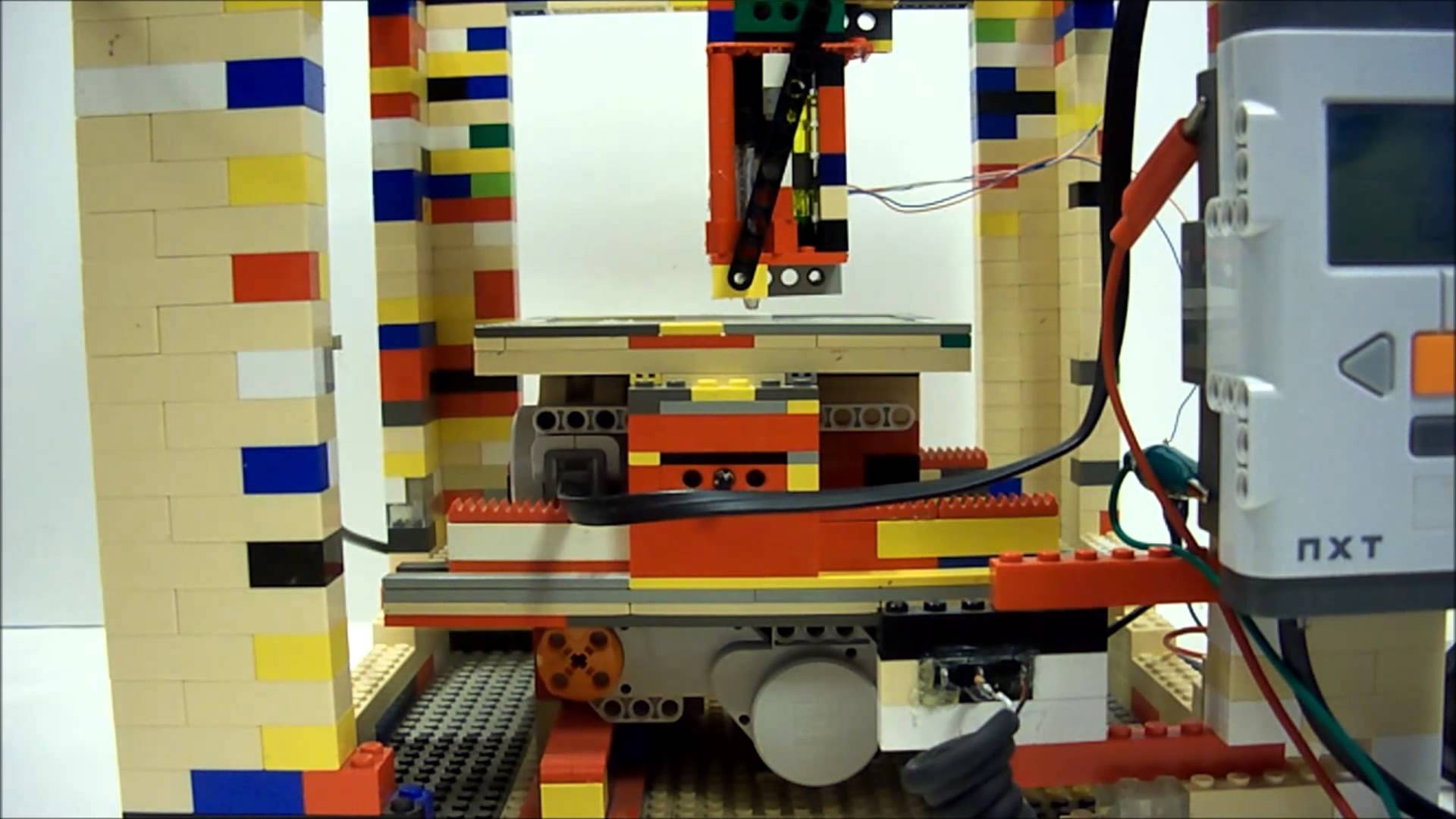
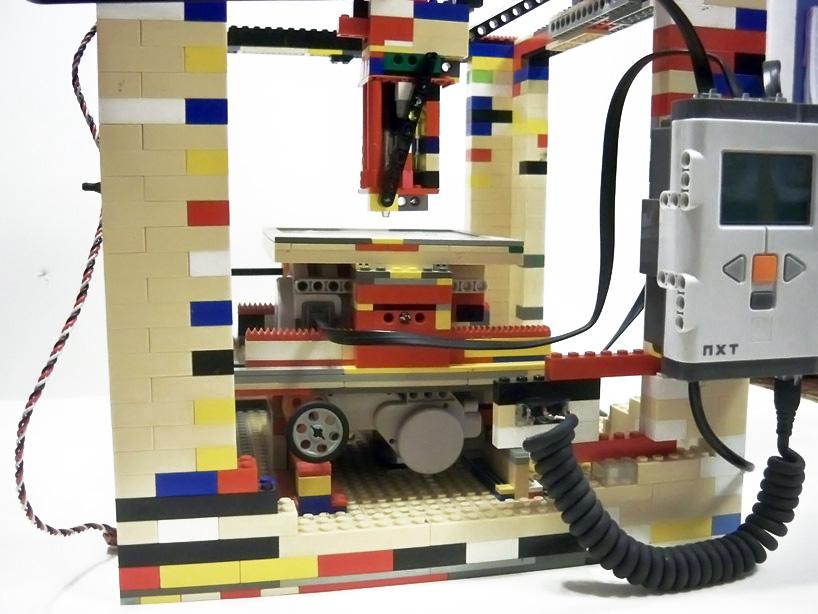
3D printers sure are becoming the talk of the day. We don’t see any reason why they shouldn’t be this famous. They can do almost everything; print gunsfood that we can eatprinted prosthetic hands, rocket engine parts and the list goes on! While the wonders of 3D printersare amazing, their price is still a bit too high for many. One particular engineer aka Mastermind tackled this problem in a wonderful new way. Meet the author of Instructable, Matthew Krueger. He has managed to create a functional 3D printer using the LEGOs that were lying around in his house.
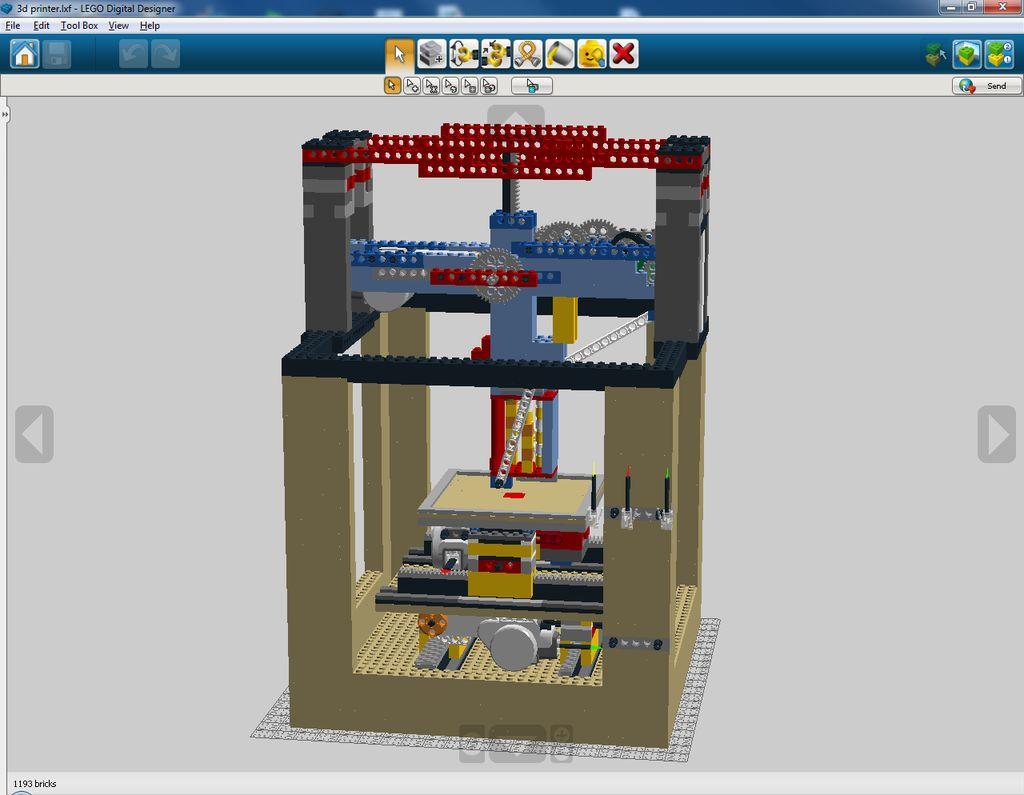
LEGObot 3This whole project kicked off as a mere practical exercise. Matthew had an encounter during his college with a Makerbot and that had him gain interest in 3D printers and their uses. However, as with most of the students during their studies, he didn’t have enough cash to afford a ‘ready-made’ 3D printer. Must have been a real let down situation but he being an engineering student decided to change it. This resulted in Matthew building his very own 3D printer. He made use of LEGOs Digital Designer software to create a fully functional 3D printer using just a few hundred LEGOs, a motor from an old VCR and a hot glue gun. There you have it folks, that’s the arsenal you need and of course the genius mind of an engineer to achieve an operational 3D printer. The LEGObot takes commands from the LEGO NXT control module which runs the VCR motor and results in the activation of the print head!
LEGObot 4LEGObotMatthew has termed his LEGObot as a ‘of a prototype than a finished project.’ He hopes to eventually run it using the G-code and to make some mechanical improvements in the design. While yes, the LEGObot sure lacks the build volume and isn’t very classy nor too high end result oriented, it gets the job done. Above all, this  sure is one heck of an innovation.

This Machine Converts Human Sweat Into Drinkable Water

sweat to drinkable water

Sweat Machine 5

Nowadays one might just confuse science and technology being used to come up with fancy gadgets only. However, that is not the case. The primary purpose of science, for which it is still being used, is improving the lifestyle of humans and to come up with ways to protect life and enhance it. Science is tackling the world problems and is striving to find solutions to them. Our today’s article deals with one such endeavor. How many of you are aware that drinking water and its availability is an issue. Experts are already foreseeing the third world war being fought over water resources?
Sweat Machine 4
Recently UNICEF teamed up with two other concerned entities; PR agency Deportivo and youth soccer competition Gothia Cup to come up with a gadget that could be used to convert sweat to drinking water. The key idea behind the so called Sweat Machine is to take the sweat, extract the liquid and convert it into drinkable water.
Sweat Machine 3
Sweat Machine 2While one may not see this gadget as solving the problem of drinking water, this sure is a nice way to get attention of people. However, let’s not forget that this gadget may solve individual needs of drinkable water for those who don’t have access to clean water. Just sweat a little and there you go; clean and drinkable water!

ERO Robot Crushes Buildings and Recycles Their Concrete

ERO-Concrete-Recycling-Robot-2

ERO Concrete Deconstruction Robot 2

Engineering is not only about creating new things, it is also about disposing off of the older things as well. We need smart disposal to reduce the waste and therefore one cannot ignore the recycling process. Clean and efficient disposal of waste and recycling of materials is becoming the talk of the day. We all know how human race is running low on natural reserves, so obviously if you can recycle and use then why not do it!
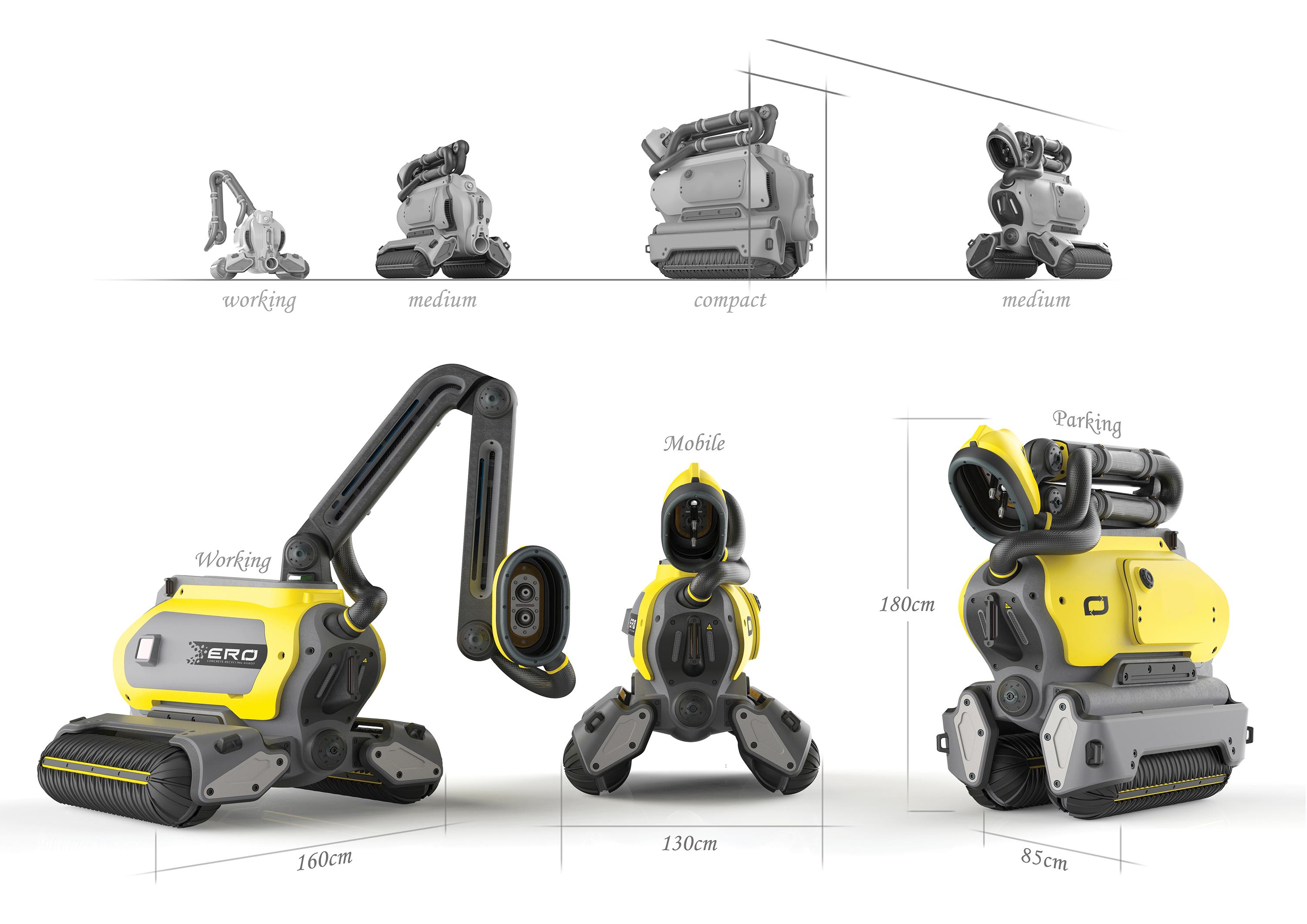
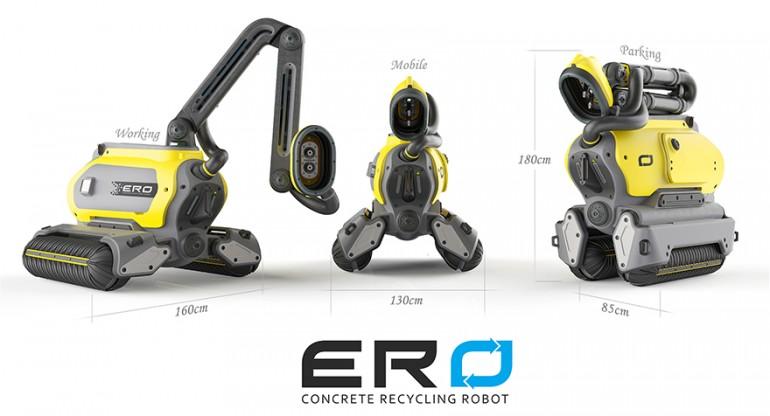
ERO Concrete Deconstruction Robot 3What caught our attention was the fact that building tall towers is being done quite efficiently and is taking place and every now and then. That is good, but what about when you need to demolish them? Here’s a fact; they don’t fall efficiently at all. This is where the engineering kicks in. In order to tackle the waste and come up with better means of building demolition an industrial designer, Omer Haciomeroglu, has created what is being called as ERO concrete deconstruction robot.
ERO Concrete Deconstruction Robot 4Well, no doubt, that using robotics for such a task is a brilliant idea! It is safer and will be much more efficient. However, it is the deconstruction methodology which ERO concrete deconstruction robot uses and how it manages waste which makes it so much special. In words of Omer; ‘ERO is a Concrete Deconstruction Robot designed to disassemble reinforced concrete structures and enable the building materials to be re-used for new prefabricated concrete buildings.’
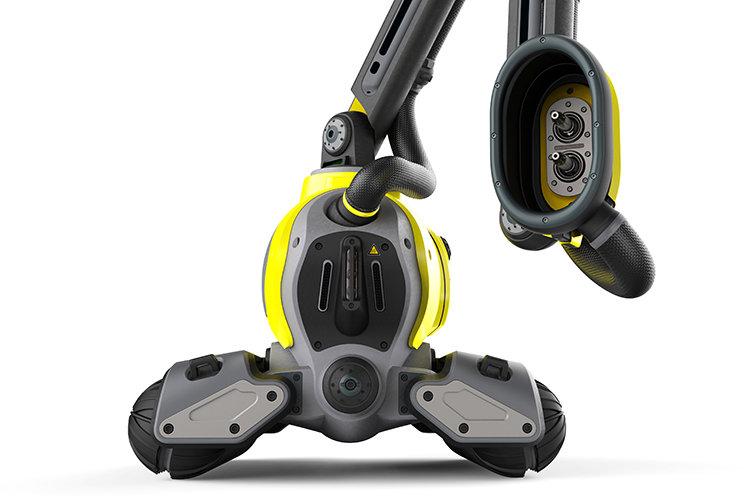
ERO Concrete Deconstruction Robot 5He further stated that in order to dispose-off the hardened concrete which is the most important construction material, the ERO ‘uses water jets to crack the concrete surface to disassemble concrete and sucks up the mixed debris. It cleanly separates the waste mixture and packages the cleaned material. What was previously waste, now turns into labeled packaged asset to be transferred right away into concrete pre-casting stations to be re-molded into new building blocks.’
ERO Concrete Deconstruction RobotSuch inventions are sure handy and should be acknowledged and given their due importance. We congratulate Omer and hope that he would work towards making his invention more effective and efficient.

NASA Tests A Hybrid Plane That Works Like A Toyota Prius

Environmentally Responsible Aviation

Hybrid Plane 2

Recently there has been a shift in paradigm and now science is doing its best to go green. We have come to realize how our inventions have affected the nature and are doing our best to undo those harmful effects and to be more and more environment friendly. One such project was ERO robot that recycles concrete and Project Zero Electric Plane. This was the reason behind NASA’s project known as Environmentally Responsible Aviation (ERA). The ERA’s goals were to reduce aircraft emissions, noise and fuel consumption. This is what inspired the engineering students from the University of Virginia into focusing their time and energy into the simulation of an environment friendly plane. The result of this work is a simulation that employs a hybrid electric plane which is capable of flight with 50 passengers aboard. The team was led by aerospace engineering students; Sohail Ahmad and Kelly Thomas and these undergraduates used Flight Optimization System (FLOPS) to evaluate a number of designs which were based on propulsions systems and airplanes which are already in use. The whole study was carried out to find out if a hybrid – internal combustion engine and electric motor – was feasible for being a passenger aircraft.
Hybrid Plane 3The team decided,  to make use of the batteries while takeoff and landing since they take place in congested areas and the internal combustion engine (ICE) would be in charge during the rest of the flight. The ICE would be charging the batteries for the landing part too. The test plane was chosen to be ATR 42-600 which is a twin turbo propeller commercial aircraft that can carry 48 persons. The team wanted to see if converting this model would result in a feasible hybrid solution to the problem. Two methodologies were employed; series and parallel. In a series system; ICE works to charge the batteries and powers an electric generator which in turn runs the motor. However, for the parallel system; the propeller is capable of being powered by either the ICE and/or electric motor. Their final conclusion was that the parallel system was more efficient for their design and project.
The batteries are a crucial part of this system and they had to consider a number of factors including the power to weight ratio and life of battery. The modeling they did in FLOPS gave them specifics for the battery they needed. Accordingly they needed energy enough to provide them with a thrust of more than 6,000 lbs at a speed of 368 km/hr. This came down to be 1500 kW per engine. Their final choice of battery was a Lithium polymer battery which ended in a total weight of batteries equaling less than 13,000 lbs.
Hybrid PlaneThe final conclusion from the team tells us that in the coming years using this modification approach for an aircraft designed to work ICE  would be much more fuel efficient  for distances of up to 300 miles and holds a promise for the environment. However, retrofitting the current technology won’t prove to be very fruitful.  But they are confident that using the current technology to design an aircraft specifically for the hybrid propulsion system would do the trick. Research is in progress and we wish them good luck. This sure is a work of wonderful engineering.

Engineers Develop Disposable UAVs Inspired by Paper Planes

paper UAV

Disposable UAVs Inspired by Paper Planes

Okay folks, what comes to your mind every time we talk about UAV? A military aircraft used in the combat zones, right? Yeah well, to tell you the truth that is the image we have implanted in our minds thanks to the media! However, we are here today to tell you that UAVs have other images too. Let’s say for example; a rather playful image of an UAV working to monitor the environment. Sounds peaceful, right?
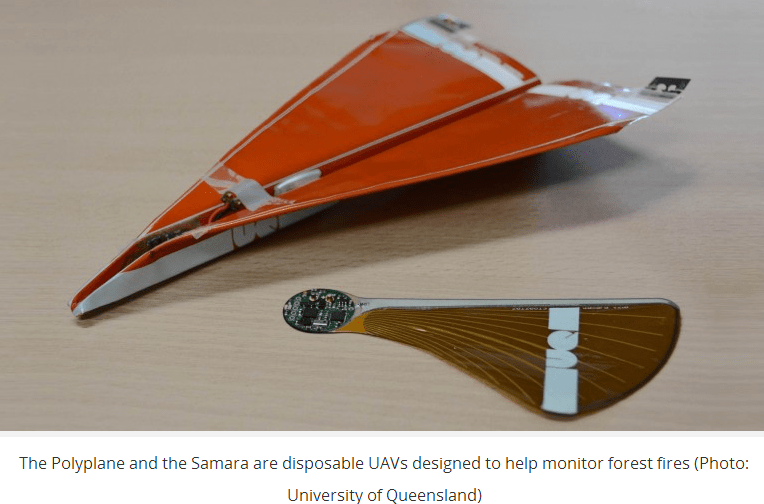
Disposable UAVs Inspired by Paper Planes 3Meet Dr. Paul Pounds who works at the University of Queensland, Australia who has designed not one but two UAVs which are to send out a positive image of the UAVs while working for the betterment of environment. But that’s not all, these UAVs’ design has been created keeping in mind that we are opting for such a cheaply manufactured UAV, that it can be used once and then discarded. Yup, they were in fact trying to make a single-use and disposable robot! Let’s talk about the two designs and see what their intended use is.
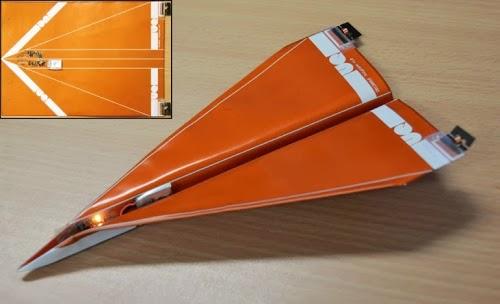
Disposable UAVs Inspired by Paper Planes 4The first design has been modeled while being inspired from a paper plane. It has been created with a cellulose sheet that has, using ink-jet printer, electronic circuits on its body. After these circuits have been ‘laid’ the UAV is exposed to a curing process that employs UV light. This results in the transformation of the UAVs body into a circuit board which is flexible. The UAVs’ avionics system is attached to the rear of the UAV and is connected to the circuits enabling it to steer itself while it is being deployed to a targeted area.
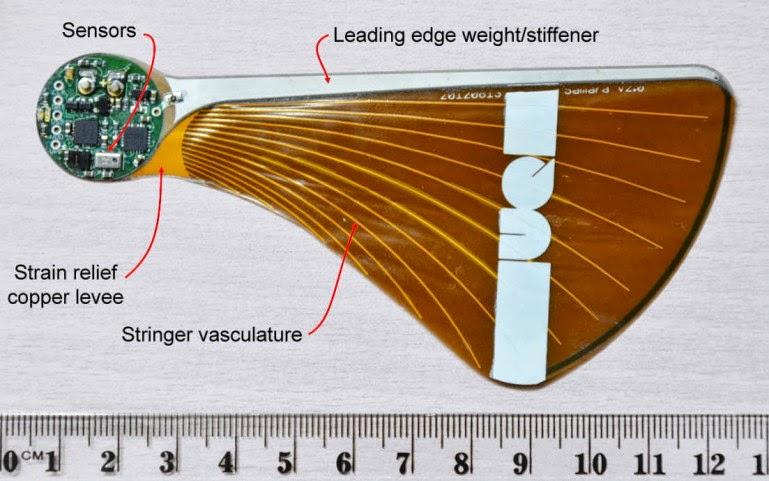
Disposable UAVs Inspired by Paper Planes 2The second design has a name already; Samara. This UAV is somewhat odd looking and that is because it has been designed to look like a maple seed. This one has been built from a circuit board that is rigid unlike the sheet used for the first design and has sensors placed on a small PCB at the leading end of the UAV. The intended use for Samara is to drop them in large numbers from a larger drop vehicle in order to survey a vast area. The Samara, owing to its design, will fall to the ground quite gently all the while rotating – similar to a helicopter’s blades- and will be collecting information related to environment that would be valuable.
We still have our doubts if Dr. Pound’s creative designs would come into a full scale production stage or not, but what can be seen clearly is that many corporations and research institutes are taking a lot of interest in UAVs and not just for military purposes. With efforts of many universities around the world, including all top 10 engineering colleges, its nice to see this technology moving forward and producing other research outcomes such as the robotic bird which is so real it got attacked by a hawk. We sincerely hope that these designs prove handy and are made use of for peaceful purposes.

London To Build A Garden Bridge Over River Thames

thames-garden-bridge-5

Garden Bridge for London by Thomas Heatherwick3

Great infrastructures are not a new thing yet they never fail to mesmerize the public of the time. One example of such proposed and approved structure is what we are going look at. In order to connect the north and south side of London, the famous designer Thomas Heatherwick unveiled his amazing concept of a pedestrian bridge. The Garden Bridge as it is being called was selected by Transport for London as the new walkway traversing between Temple and South Bank, London. As the name suggests, it does remind one of the hanging gardens of Babylon; the only difference is that this can be called the hanging bridge of gardens!
Heatherwick is known for his iconic double Decker bus design and his splendid 200 piece cauldron at the London Olympic Games. Now he has come up with another magnificent idea for Thames Walkway Bridge; he says: “The idea is simple; to connect north and south London with a garden.”
Thames-Garden-Bridge-Heatherwick-Studio-3It is said to form into a tunnel of flora with grass, trees, wildflowers, native plants, etc, with the center portion for the visitors and pedestrians to walk on. They will have all to get amused, standing on the bridge and viewing the bustling city life, all thanks to the elevated outposts on the edge of the bridge.
The idea presents itself as a revolutionary one, opposed to many, as a bridge is supposedly a quick stream to cover ones displacement- they are to be as efficient as possible, however, the Garden Bridge adheres to encouraging you to meander around the rosy smells.
Joanna Lumley, a well-known British actress, has been a protagonist of the above idea. “This garden will be sensational in every way,” she said, “a place with no noise or traffic where the only sounds will be birdsong and bees buzzing and the wind in the trees, and below the steady rush of water…there will be blossom in the spring and even a Christmas tree in mid-winter. I believe it will bring to Londoners and visitors alike peace and beauty and magic.” Of course for Lumley, the above con is part of the appeal. As she proudly notes: “It will be the slowest way to cross the river.”
2. the Garden BridgeWatch out and wait for this splendid stopover on your way to crossing river Thames. Irresistible as it seems, it is going to be a great stop to relax and cross over-ironic!